
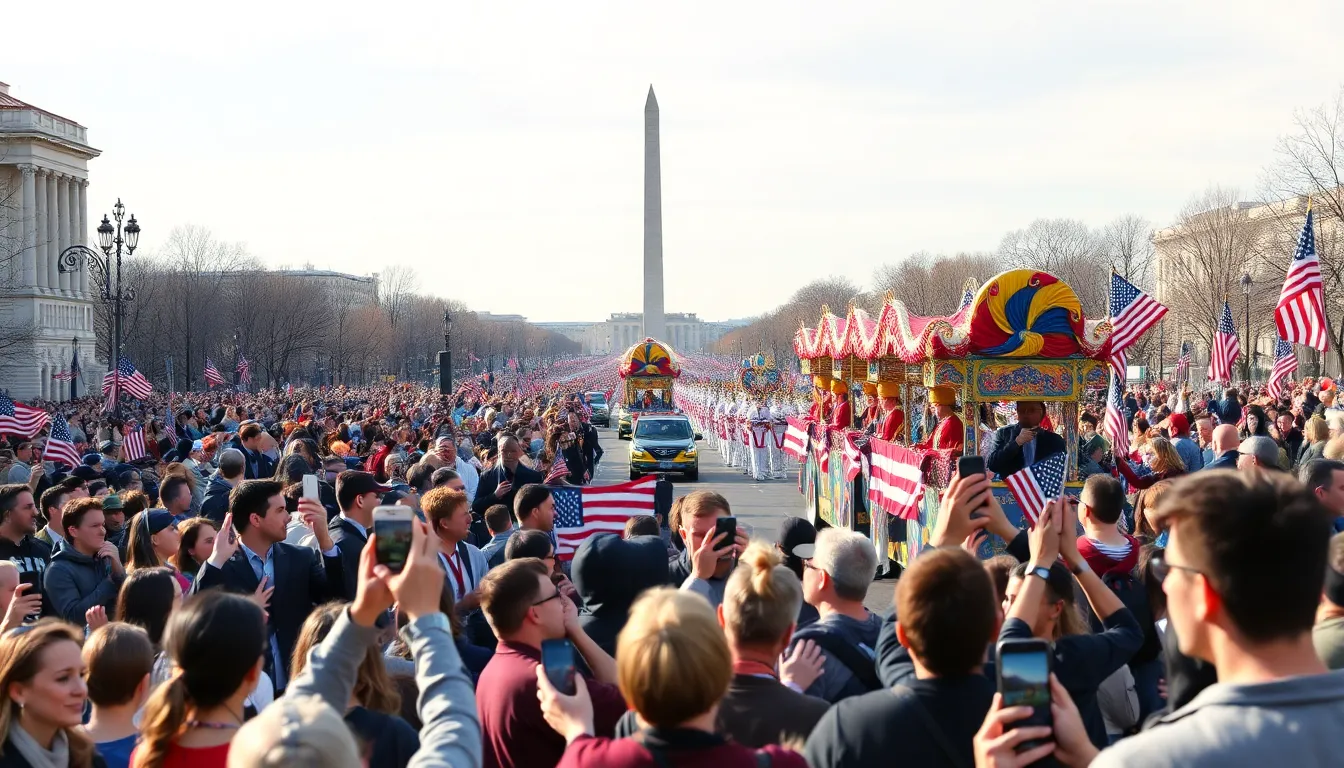
The inauguration parade is one of the most anticipated events in the political calendar, and it’s not just about the pomp and circumstance. Picture this: a vibrant procession filled with marching bands, colorful floats, and a crowd buzzing with excitement. It’s a spectacle that brings the nation together, celebrating democracy in style. But wait—when does this grand parade actually kick off?
Table of Contents
ToggleOverview of the Inauguration Parade
The inauguration parade serves as a key highlight of the inauguration day, marking the commencement of a new presidential term. Traditionally, the event occurs immediately following the inauguration ceremony, welcoming the newly elected president. Spectators line the streets, eager to witness a blend of patriotic performances, vibrant floats, and enthusiastic marching bands.
Typically, the parade follows a predetermined route that showcases notable landmarks, enhancing the visual spectacle. Participants often include military units, civic organizations, and cultural groups, ensuring a diverse representation of American society. Each segment of the parade contributes to a sense of national pride and unity.
Timing plays a crucial role in the parade’s atmosphere. Starting shortly after the official swearing-in ceremony, the event usually takes place around midday. Attendance attracts thousands of spectators, both in person and through media coverage, generating excitement across the nation.
Weather conditions can influence the parade’s experience, prompting participants and organizers to prepare for varying scenarios. The historic significance of this celebration underscores the importance of honoring democratic principles. Engaging festivities feature prominently, inviting the public to celebrate milestones in the nation’s governance.
Striving to create a memorable experience, the event inspires hope and community spirit. The combination of entertainment and ceremonial traditions fosters a lively atmosphere, encouraging participation from all walks of life. Awareness of the parade’s timing enriches the overall inauguration experience for attendees across the country.
Key Details on Timing
Timing holds significant importance during the inauguration parade, a prominent event that occurs shortly after the inauguration ceremony.
Date of the Inauguration Parade
The inauguration parade takes place on January 20th, matching the inauguration day for the newly elected president. This date establishes a tradition honoring the peaceful transfer of power. When January 20th falls on a Sunday, the parade may occur on the following Monday to accommodate various ceremonies. Every four years, this date becomes a focal point for citizens and officials alike, emphasizing the importance of participation in democracy.
Start Time of the Parade
Typically, the inauguration parade starts around 2:00 PM EST. Following the swearing-in ceremony, attendees often gather to witness this celebration of national unity. Time slots may vary depending on logistical factors or specific presidential arrangements. Schedule flexibility ensures all aspects of the event run smoothly. Attendees arrive early to secure good viewing spots along the parade route, which features numerous performances and showcases diverse groups.
Historical Context of the Parade
The inauguration parade has roots deeply embedded in American history, serving as a celebration of democracy and national unity.
Previous Inauguration Parades
Previous inauguration parades showcased profound moments in American history. The first recorded parade occurred in 1789, with George Washington’s inauguration. Over the years, parades have included various elements such as military displays, civic organizations, and cultural performances. For instance, the 2009 parade featured the “Our People, Our Future” theme, celebrating diversity. Each event reflects the era’s political climate and societal values, engaging spectators in a shared patriotic experience.
Evolution of the Parade Timing
The timing of the parade has evolved since its inception. Initially, it took place at various times throughout the day. Today, the parade generally starts at 2:00 PM EST, following the swearing-in ceremony. Adjustments occur if January 20 falls on a Sunday, with the event moving to the following Monday. This consistent timing allows for better planning and increased attendance, enhancing the overall experience for spectators and participants alike. Each inauguration thus represents not only a political transition but also an evolution in tradition.
Viewing Options for the Parade
Attendees have multiple ways to experience the inauguration parade in person and online.
In-Person Attendance
For those wanting to celebrate live, arriving early to secure a good viewing spot is essential. Various locations along the parade route provide unique vantage points to witness the spectacle. Crowds gather at the National Mall and near prominent buildings, like the White House and the U.S. Capitol. Security measures are in place, requiring attendees to go through checkpoints. Bringing essentials like water, snacks, and portable chairs enhances the overall experience. Attending with friends or family adds to the excitement, as shared moments create lasting memories.
Virtual Viewing Options
Viewers unable to attend in person can still enjoy the parade through various online platforms. Major news networks and streaming services typically provide live coverage, ensuring access to the event. Social media platforms also share highlights, allowing real-time updates and behind-the-scenes content. Websites dedicated to the inauguration offer comprehensive information and live feeds, making it easy for people to follow along. Participating in virtual watch parties brings a sense of community, allowing friends and family to engage together despite physical distances.
Tips for Attendees
Attendees should prioritize preparation for an enjoyable experience at the inauguration parade. Knowing a few essential tips enhances participation.
Arriving Early
Arriving early significantly improves the chances of securing a great viewing spot. Many attendees gather along the parade route hours in advance, so early arrival is prudent. Popular locations can fill up quickly, making it important to plan ahead. Engaging with fellow spectators creates a sense of community, providing an enjoyable atmosphere while waiting. Arriving as early as 9:00 AM is recommended, allowing for last-minute adjustments and familiarization with the surroundings. Remember that the parade starts around 2:00 PM EST, so timing remains crucial.
Transportation and Accessibility
Transportation options abound for getting to the inauguration parade. Public transit serves as an optimal choice, reducing traffic congestion and parking challenges. Metro services often run extended schedules, accommodating increased ridership. Ride-sharing platforms also provide convenient alternatives for arrivals. Accessibility remains a priority, ensuring that the parade accommodates individuals with disabilities. Designated viewing areas and service routes improve access for everyone. Attendees should check local transportation resources for updates and plan their routes in advance to enhance the overall experience.
The inauguration parade stands as a vibrant celebration of democracy and national unity. With its rich history and significance, it draws thousands of spectators eager to participate in this momentous occasion. Knowing the parade starts around 2:00 PM EST on January 20th ensures that attendees can fully enjoy the festivities.
Whether attending in person or watching from home, being prepared enhances the experience. Arriving early and planning ahead can make all the difference. This event not only marks the beginning of a new presidential term but also serves as a reminder of the values that unite the nation. Embracing the spirit of the parade fosters a sense of community and pride among all who participate.
