
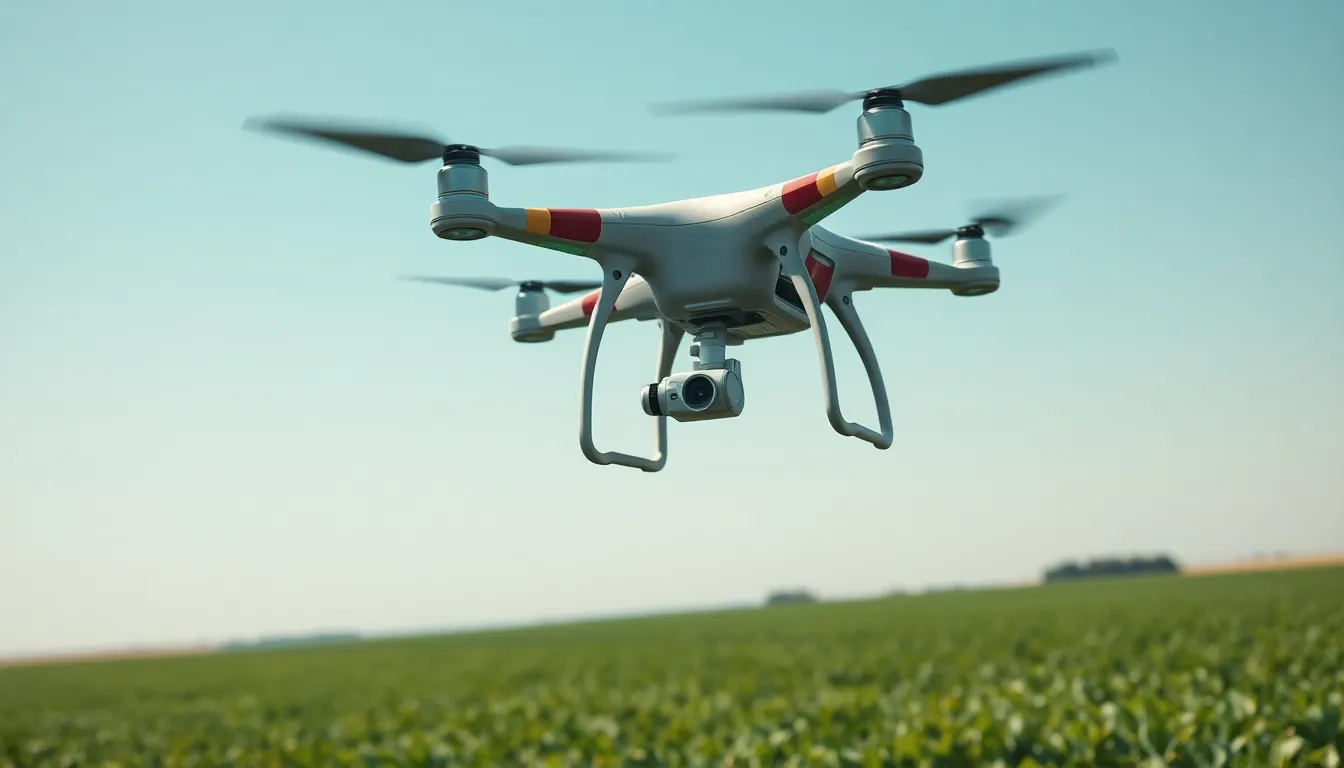
In a world where everything seems to be getting a little too serious, professional drones swoop in like the superheroes of the tech realm. They’re not just flying gadgets; they’re the ultimate multitaskers, ready to tackle everything from aerial photography to precision agriculture. Imagine capturing stunning landscapes without breaking a sweat or surveying vast fields in mere minutes. Who knew flying could be this productive?
Table of Contents
ToggleOverview of Professional Drones
Professional drones serve various functions across multiple sectors, demonstrating their versatility. They excel in capturing aerial photography, providing unique perspectives without the need for traditional equipment. Construction companies rely on these drones for site surveys, enhancing planning with real-time data.
Precision agriculture benefits significantly from drone technology by enabling farmers to monitor crops and assess field conditions efficiently. The ability to conduct aerial inspections aids in identifying issues such as crops needing irrigation. For real estate agents, drones offer stunning visuals of properties, significantly increasing buyer interest.
Delivery services utilize professional drones to streamline logistics, ensuring faster shipping options for customers. These unmanned aerial vehicles reduce the time required for last-mile deliveries. Environmental monitoring also involves drones, providing crucial data for conservation efforts and wildlife tracking.
Various industries emphasize safety with the use of professional drones. Inspections of infrastructure such as bridges and pipelines can occur without risking personnel safety. When considering cost-effectiveness, professional drones often represent a lower investment than employing helicopters for similar tasks.
Legal considerations exist regarding the operation of drones, with regulations varying by region to ensure safety and privacy. Compliance with guidelines is essential for drone operators. Reliability features, including GPS technology and high-resolution cameras, enable precise operation, further enhancing their utility.
As technology evolves, the future of professional drones appears promising. Innovations continue to emerge, expanding capabilities and applications in diverse fields. Industries are likely to adopt professional drones more widely, enhancing efficiency and productivity across their operations.
Types of Professional Drones
Professional drones serve various specialized roles across multiple industries, enhancing capabilities and offering unique solutions.
Aerial Photography Drones
Aerial photography drones capture stunning images from above. Equipped with high-quality cameras, these drones help photographers create breathtaking visuals for real estate, weddings, and events. Features typically include gimbal stabilization and adjustable settings for different lighting conditions. Many users appreciate the versatility these drones provide, enabling them to shoot in diverse environments. Examples include the DJI Mavic series and the Phantom series, both renowned for their aerial image quality. The ability to produce 4K video adds to their appeal, making aerial photography drones essential tools for professional photographers.
Surveying and Mapping Drones
Surveying and mapping drones play a crucial role in data collection and analysis. These drones utilize advanced sensors and imaging technology to generate detailed maps and models. Surveyors and engineers often employ drones for land assessments, construction site management, and environmental studies. The integration of GPS and LiDAR technology enhances accuracy and efficiency in capturing spatial data. Popular models such as the senseFly eBee and the DJI Matrice series demonstrate the effectiveness of drones in this field. The significant time savings and reduced labor costs associated with drone surveying make them valuable assets for professionals in construction and land surveying.
Features to Consider
Professional drones offer various features that enhance their functionality in diverse applications. Evaluating these aspects can help in selecting the right drone for specific tasks.
Camera Quality
Camera quality significantly impacts the value of a professional drone. High-resolution cameras, often 4K or better, deliver sharp images suitable for aerial photography and video capture. Gimbal stabilization minimizes vibration and ensures smoother footage, crucial for dynamic shots. Multi-camera setups allow for capturing different perspectives simultaneously, making shoots more versatile. Advanced features like zoom capabilities enhance detail in significant scenes, catering to industries such as real estate and surveying. The choice of camera can affect deployment in environments like construction sites or events.
Flight Time and Range
Flight time and range are critical factors for operational effectiveness. Most professional drones provide flight times between 20 to 40 minutes, depending on payload and conditions. Extended battery life can maximize productivity during lengthy missions. Range typically varies from 1 to 7 kilometers, with some models offering enhanced connectivity. Maintaining a strong signal is essential for control and data transfer. Drones equipped with return-to-home features further enhance safety by ensuring safe landings, even when communication is lost. Choosing a drone with an optimal flight range and time correlates directly to successful project completion.
Applications of Professional Drones
Professional drones serve various crucial applications across multiple sectors. Their advanced technology facilitates innovative solutions, providing significant benefits in search and rescue operations and agricultural monitoring.
Search and Rescue Operations
Search and rescue professionals utilize drones to enhance situational awareness. Equipped with thermal imaging cameras, these drones identify heat signatures from missing individuals or stranded hikers. Fast deployment in challenging environments increases the likelihood of successful recoveries. Aerial views assist teams in mapping search areas efficiently, reducing the time needed for ground searches. Integration with GPS further improves navigation and coordination among rescue units. Drones also capture real-time images, enabling quick assessments of dangerous or inaccessible locations. Overall, the precision and responsiveness of drones make them invaluable tools in life-saving scenarios.
Agricultural Monitoring
Farmers rely on drones for effective agricultural monitoring. High-resolution cameras provide detailed imagery for assessing crop health from above. Regular aerial surveys help identify irrigation issues, nutrient deficiencies, and pest infestations early. Data gathered supports timely interventions, improving yields significantly. Drones equipped with multispectral sensors analyze soil conditions, enhancing precision farming techniques. Various flight patterns allow for efficient coverage of large fields, saving time and labor costs. As a result, agricultural drones play a critical role in maximizing productivity and sustainability in modern farming practices.
Regulations and Safety Measures
Regulations govern the operation of professional drones, ensuring safety and privacy for all. The Federal Aviation Administration (FAA) outlines key rules for drone usage in the United States, including registration requirements for drones weighing over 0.55 pounds. Operators must also adhere to guidelines regarding flight altitude, maintaining a maximum height of 400 feet.
Licensing comes into play for commercial drone pilots as they must obtain a Remote Pilot Certificate. This certification requires passing an aeronautical knowledge test and demonstrates the ability to operate drones safely. Compliance with these regulations is essential for legal operation and respects privacy rights.
Safety measures are equally important. Pre-flight checks should include equipment inspections, battery status evaluations, and weather condition assessments. Staying aware of no-fly zones, such as near airports or military bases, enhances operational safety. Implementing a clear communication plan among team members allows for better coordination during missions.
Data protection also needs attention. Any aerial footage collected must adhere to privacy laws, particularly regarding recording individuals without consent. Using geofencing technologies can help prevent drones from entering restricted areas, minimizing potential risk and liability.
Additional safety features are available in modern drones. Many professional drones include obstacle avoidance systems that improve navigation and prevent collisions. Emergency protocols should be in place, allowing for quick response in case of malfunctions or unforeseen circumstances.
Ultimately, awareness of regulations and adherence to safety measures contribute significantly to the responsible use of professional drones. Integrating these practices leads to more effective operations while protecting individuals and the broader community.
Professional drones are transforming industries by providing innovative solutions that enhance efficiency and productivity. Their ability to capture stunning aerial imagery and gather critical data makes them invaluable tools for professionals across various sectors. As technology continues to advance, these drones will likely evolve further, opening up new possibilities for applications in fields such as agriculture, construction, and environmental monitoring.
With an emphasis on safety and compliance, the responsible use of drones ensures that they can operate effectively while minimizing risks. As businesses adapt to these powerful tools, the future of professional drones promises exciting advancements that could redefine operational capabilities and reshape industries for years to come.
